

李殷昌 / E.C. Lee / SIMTEA.com
1. Introduction: Re-examining Panax, the 'Healing Root' of Human History
Ginseng is more than a medicinal crop; it is an ecological link connecting East Asia and North America, and a profound medium that has penetrated human economy and culture for millennia. Botanically belonging to the Araliaceae family, the scientific name Panax is a compound of the Greek words 'Pan' (all) and 'Axos' (cure/healing), implying the meaning of a 'Panacea' or cure-all.1 This nomenclature suggests that when the 18th-century Swedish botanist Carl Linnaeus named this genus, he was aware of the extensive and absolute medical trust ginseng commanded across China and East Asia.1
This report, based on extensive research into the Genus Panax distributed globally, goes beyond a mere list of efficacies. It performs a multidimensional analysis covering the geographical characteristics (Terroir) of native and cultivated regions, ecological evolutionary processes, historical trade routes (the Ginseng Road), unique cultural customs such as the Simmani (ginseng diggers), and modern global economic trends. In particular, it aims to deeply investigate the intrinsic value and context of not only the major economic crops—Korean Ginseng (Panax ginseng), American Ginseng (Panax quinquefolius), Chinese Notoginseng (Panax notoginseng), and Vietnamese Ginseng (Panax vietnamensis)—but also rare species found in the Himalayas and Japan.
2. Botanical Classification and Geographical Distribution: The Global Panax Atlas
There are approximately 18 species within the Panax genus worldwide, exhibiting a phytogeographically fascinating pattern known as 'East Asian–North American Disjunct Distribution'.1 This serves as living fossil evidence of how a plant group with a common ancestor differentiated and adapted across the Pacific Ocean during the climatic shifts, continental drifts, and glacial cycles of the Tertiary period.
2.1 Classification and Habitat Characteristics of Major Economic Species
The major economic crops of the Panax genus are broadly categorized into four species, each possessing unique habitats and morphological characteristics.
2.1.1 Korean Ginseng (Panax ginseng C.A. Meyer)
Panax ginseng is the type species of the genus, native to the mountainous regions of the Korean Peninsula (South and North), Northeast China (Manchuria), and the Russian Primorsky Krai. It prefers cool climates and the shade of mixed coniferous-broadleaf forests. It is the most widely studied and highly valued species for its medicinal properties globally.4 In Russia and China, wild populations are designated as strictly protected species to prevent extinction.4 Morphologically, it features 3 to 6 palmate compound leaves, and the root often resembles a human figure, which is the origin of the name 'In-sam' (Man-Ginseng).4
2.1.2 American Ginseng (Panax quinquefolius L.)
Also known as Western Ginseng, this species grows in the deciduous hardwood forests of the Eastern and Central United States (Wisconsin, Appalachian Mountains) and Eastern Canada (Ontario, Quebec).5 The specific epithet quinquefolius means "five leaves," a morphological trait similar to Korean ginseng.7 Ecologically, however, it has adapted to the cooler, moister forest environments of North America. Wild American ginseng populations have plummeted due to overharvesting, leading to its listing in CITES (Convention on International Trade in Endangered Species of Wild Fauna and Flora) Appendix II, which strictly regulates international trade.7
2.1.3 Notoginseng (Panax notoginseng (Burkill) F.H.Chen)
Native to Southwestern China, particularly Yunnan and Guangxi provinces, this species is also known as 'Sanqi'.1 It adapted to a warmer and more humid subtropical alpine climate compared to Korean or American ginseng. Historically found in the understory of evergreen forests at altitudes of 1,000–2,000 meters, wild individuals are now nearly extinct, and the supply relies almost entirely on large-scale cultivation.8
2.1.4 Vietnamese Ginseng (Panax vietnamensis Ha & Grushv.)
Discovered during the Vietnam War in 1973 and officially registered in 1985, Vietnamese Ginseng (Ngoc Linh ginseng) is the southernmost species of the Panax genus (latitude 15°N).9 It grows in the hot and humid deep jungles of Mount Ngoc Linh in Vietnam's central highlands at elevations over 1,200 meters. Morphologically, it is characterized by a bamboo-like horizontal rhizome development.11 It is currently classified as Critically Endangered on the IUCN Red List.12
2.2 Overlooked Rare Species and Ecological Diversity
Beyond the four major species, the Panax genus includes species occupying diverse ecological niches, evolving unique genetic traits adapted to their specific environments.
Himalayan Ginseng (Panax pseudoginseng Wall.): Native to the forests of the Himalayas in Nepal, Bhutan, Northeast India (Sikkim), and Tibet.13 This species features a round tuberous rhizome rather than a root and is used locally as a hemostatic or tonic.15 It faces threats from rapid climate change and habitat destruction in the Himalayas, prompting conservation modeling research in regions like Sikkim.16
Dwarf Ginseng (Panax trifolius L.): A small species native to Eastern North America. Unlike American ginseng, it has a tuber and exhibits the characteristics of a spring ephemeral—sprouting early in spring and entering dormancy before summer. This is a unique survival strategy to maximize photosynthesis before the forest canopy closes.1
Bamboo-Leaf Ginseng (Panax japonicus (T.Nees) C.A.Mey.): Distributed in Japan and Southern China, characterized by a rhizome that resembles bamboo joints. In Japan, it is called 'Chikusetsu-ninjin' and is primarily used as an expectorant or antipyretic.1
This species diversity represents the evolutionary history of Panax plants adapting to various latitudes and altitudes through glacial and interglacial periods. Recently, genomic databases like 'PanaxGDB' have been established to integrate genomic data of over 12 Panax species with information on over 600 compounds, aiming to uncover evolutionary relationships and identify useful genes.19
3. Chemotaxonomy and Pharmacological Profiles
The defining characteristic of Panax plants is their content of unique saponin compounds called Ginsenosides. However, each species has evolved a distinct ginsenoside composition based on its habitat, serving as a 'Chemical Fingerprint' that determines its pharmacological efficacy.
3.1 Crucial Differences in Ginsenoside Profiles Among Species
Korean Ginseng (P. ginseng) vs. American Ginseng (P. quinquefolius): The most definitive chemical marker distinguishing these two is the presence of Ginsenoside Rf and F11. Korean ginseng exclusively contains Rf, whereas American ginseng lacks Rf almost entirely but contains Pseudoginsenoside F11.20 Pharmacologically, Korean ginseng has a balanced ratio of Rg1 (CNS stimulant/vitality) to Rb1 (sedative), or is relatively richer in Rg1. In contrast, American ginseng has a significantly higher content of Rb1, exhibiting strong sedative and antipyretic effects.20 This supports the traditional classification of Korean ginseng as having 'Yang' (warming/energy-boosting) properties and American ginseng as having 'Yin' (cooling/nourishing) properties.
Notoginseng (P. notoginseng): Notoginseng contains a unique component called Notoginsenoside R1. It also has a much higher content of Rg1 compared to Korean ginseng, specializing in hemostasis and improving blood circulation (removing blood stasis).20 This is why Notoginseng is primarily used for treating trauma or preventing cardiovascular diseases.
Vietnamese Ginseng (P. vietnamensis): This species contains Majonoside R2, an ocotillol-type saponin rarely found in other Panax species, constituting over 50% of its total saponin content.12 This is noted as the source of its unique anti-stress and psychotropic stability effects.
3.2 Asymmetry in Chemical Distribution by Plant Part
While the root is traditionally valued most, recent research reveals that other parts of the plant are reservoirs for specific ginsenosides. For instance, the leaves of Korean ginseng contain significantly higher levels of Ginsenosides Re, Rg1, Rb3, and Rh1 compared to the root.23 Notably, the Re content in leaves is 2.6 to 4 times that of the root.24 This is because leaves produce more secondary metabolites to defend against external pests and UV radiation. These findings suggest the possibility of drastically reducing pharmaceutical production costs by extracting specific active ingredients from leaves instead of expensive roots. Furthermore, flowers and berries also possess unique ginsenoside profiles, leading to their re-evaluation as ingredients for cosmetics and functional foods.25
4. The Science of Terroir: Geographical & Ecological Environment and Quality
Just as wine quality depends on the 'terroir' of the vineyard, ginseng is an extremely environment-sensitive crop. Soil microbial communities, pH, UV intensity relative to latitude, and annual precipitation fundamentally alter not only the plant's survival but also the accumulation patterns of its medicinal components.
4.1 Latitude and Climate: The Aesthetics of 'Cool Stress'
Traditional Origins (Korean Peninsula, Manchuria, Eastern North America): Geumsan (Korea), Jilin (China), and Wisconsin (USA) all lie between 36°N and 45°N. These regions feature long, cold winters allowing for sufficient dormancy, and distinct seasonal temperature variations that make the plant tissue dense.26
Discovery of New Terroir (New Zealand): Interestingly, recent studies report that ginseng grown in the volcanic pumice soil under pine forests in New Zealand contains significantly higher levels of Ginsenosides Rb1, Re, and Rg1 than those from native habitats in Korea or China.28 This is attributed to New Zealand's high UV index and the unique mineral composition of volcanic soil, which impose appropriate environmental stress, stimulating the production of saponins as defense substances. This challenges the traditional notion that "native origin is best" and suggests the potential for geographical expansion of ginseng cultivation.
Climate Change and Notoginseng: Conversely, P. notoginseng in Yunnan, China, is showing vulnerability to climate change. Research indicates that while precipitation and humidity positively affect saponin accumulation, rising temperatures and drought are shrinking suitable cultivation areas.30 Under future climate scenarios, the suitability of the current main production area, Wenshan, is predicted to decline, forcing a migration to higher altitudes or the search for alternative locations.
4.2 Soil Microbes and the Secret of Replanting Failure
The greatest challenge in ginseng farming is 'Replanting Failure' (or soil sickness), where ginseng cannot be cultivated again on the same land. Previously attributed to nutrient depletion, modern research points to changes in the soil microbiome as the primary cause. Ginseng roots secrete phenolic acids to suppress harmful pathogenic fungi, but paradoxically, this simplifies microbial diversity in the soil and leads to the dominance of specific pathogens.32 Studies reveal that healthy ginseng soil is rich in specific bacterial phyla like Firmicutes and Proteobacteria, forming complex networks that aid in ginsenoside synthesis.34 This implies that restoring the soil microbial ecosystem, rather than simply adding fertilizers, is key to sustainable ginseng agriculture.
4.3 Ecological Adaptation by Cultivation Method: The Power of the Wild
The value of ginseng varies drastically depending on the cultivation method—the degree of human intervention.
Field Cultivated: Grown under artificial shade with pesticides and fertilizers, harvested in 4-6 years. High productivity but relatively lower density of bioactive substances.
Wild-simulated (San-yang-sam): Seeds are sown in natural forest shade and left to grow with minimal intervention. Only individuals that withstand natural selection pressures survive, resulting in low survival rates but a ginsenoside profile comparable to wild ginseng.35
Wild Ginseng (San-sam): Surviving for decades in the wild, these plants slow their growth rate to the extreme to endure harsh environments, focusing energy on survival. Research shows wild American ginseng contains higher concentrations of various minor ginsenosides and bioactive substances compared to cultivated ones, providing the basis for its potent pharmacological effects.37
5. Historical Context: Beyond the Silk Road, The 'Ginseng Road'
Ginseng was not merely a medicinal herb but a central pillar of East Asian diplomacy and economy. If silk opened the 'Silk Road' to the West, ginseng established the 'Ginseng Road' that sustained trade networks in Northeast Asia and facilitated encounters with the West.
5.1 'Shennong Ben Cao Jing' and the Status of Ginseng
The Shennong Ben Cao Jing (The Divine Farmer's Classic of Materia Medica), estimated to be written in the Eastern Han Dynasty (25–220 AD), clearly illustrates ginseng's historical status. The text classifies drugs into Upper, Middle, and Lower classes. Ginseng is listed at the very top of the 'Upper Class' (Superior) herbs, described as non-toxic, safe for long-term use, lightening the body, and promoting longevity.39 This textual authority provided the theoretical foundation for ginseng's reign as the supreme medicine in East Asia for thousands of years.
5.2 Korean Ginseng: The Key Currency of Tribute and Private Trade
Historically, Korean ginseng was perceived as an elixir of eternal youth by Chinese royalty and nobility.
Goryeo and Byeongnando: The international port of Byeongnando during the Goryeo Dynasty (918–1392) was a global hub frequented by Song Dynasty merchants and Arabian traders.42 Here, Korean ginseng was exchanged for Arabian spices and mercury. Roman glass vessels found in Gyeongju tombs suggest a connection where trade goods, including ginseng, flowed via the Silk Road to Rome, or Roman goods arrived in Korea via the Ginseng Road.42
The Ginseng Road of Joseon: In the Joseon Dynasty (1392–1910), ginseng trade became highly sophisticated. The Songak (Gaeseong) Merchants dominated cultivation, red ginseng processing, and distribution, growing into East Asia's largest merchant group.44 After the 17th century, at border markets like Junggang and Zhamen, ginseng acted as a vacuum cleaner sucking in Chinese silver and silk. Joseon once recorded massive trade surpluses, earning 2,000 taels of silver for just 8 geun (approx. 4.8 kg) of ginseng.45 This trade route, overlapping with the 'Tribute Road' from Seoul across the Yalu River to Beijing, functioned practically as a 'Ginseng Road'.47
5.3 The 'Sang' Craze in North America and the Funding of a Nation
In the early 18th century, ginseng changed the history of the North American continent. A letter from Jesuit missionary Pierre Jartoux, confirming the value of ginseng in China, sparked the hypothesis that ginseng might exist in North America at similar latitudes.
Lafitau's Discovery and the 'Sang' Rush: In 1716, Father Joseph Lafitau discovered American ginseng (P. quinquefolius) near Montreal, Canada, with the help of the Mohawk people.48 This triggered an immediate 'Ginseng Rush'. Legendary frontiersmen like Daniel Boone accumulated wealth by harvesting ginseng along with furs in the forests of Kentucky and West Virginia.38
Seed Money for the US Economy: To the settlers of the Appalachians, ginseng, called 'Sang', was as good as cash. George Washington's diary from 1784 records meeting pack horses laden with ginseng crossing the mountains.49 Indeed, ginseng was a critical export item for the newly formed United States to open trade with China (Qing Dynasty), providing capital that contributed to the nation's economic independence.49
6. Cultural Anthropology: Spiritual Communion of Simmani and Native Americans
Ginseng is one of the few plants accompanied by unique rituals and languages (cant) during harvesting. This demonstrates that across East and West, ginseng was perceived not just as a plant, but as an entity with spiritual power.
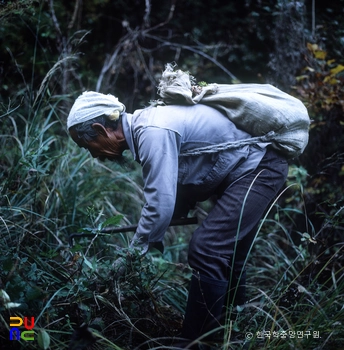
6.1 The Sociology of Korean Simmani and Their Secret Language
Simmani, the traditional wild ginseng diggers of Korea, form a closed professional group with strict rules and a unique sociolect.
Spiritual Rituals: Before entering the mountain, Simmani purify themselves and offer sacrifices to the Mountain Spirit (Sansin). This stems from the belief that wild ginseng reveals itself only to those who are pure of heart and sincere.51 The shout "Simbatta!" upon finding ginseng is not a simple cheer but a ritualistic declaration of an encounter with a divine object.53
Secret Language: Inside the mountain, everyday language is taboo. They use 'Simmani Cant', referring to ginseng as 'Ogu', rice as 'Mosae', and snakes as 'Gingachi'. This signifies a severance from the secular world and serves a shamanistic purpose to prevent mountain spirits from detecting human intentions.54 These linguistic habits symbolize that ginseng harvesting is an entry into a sacred realm.
6.2 Native American Wisdom and the 'Sang Digger' Tradition
In North America, ginseng was also treated with special reverence.
Native Wisdom: Tribes like the Cherokee, Ojibwe, Menominee, and Meskwaki regarded ginseng as the "Herb of Life." Meskwaki women used it for love charms, and Menominee hunters chewed the root to mask their breath to attract deer.49 This illustrates a cultural symbolism transcending mere medicinal efficacy.
The Ginseng Wars of Appalachia: Since the 19th century, ginseng harvesting for the poor in the Appalachian Mountains has been a means of livelihood and an exercise of rights over the 'Commons'. These "Sang Diggers" often traversed private lands, leading to conflicts with landowners and government regulations.57 Even today, "Ginseng Wars" involving theft and armed confrontations occur during harvest season in places like Kentucky and West Virginia.58
_(NYPL_b11708169-G91F396_005F).tiff/lossy-page1-640px-Digger_Indian_squaw._Yosemite%2C_Calif.(no._597)_(NYPL_b11708169-G91F396_005F).tiff.jpg)
7. Processing Science and Pharmacological Evolution: White, Red, and Black Ginseng
Ginseng undergoes dramatic chemical changes depending on the processing method, altering its value and efficacy. This is a high-level 'Biochemical Transformation' technology beyond simple food preservation.
7.1 The Spectrum of Processing and Saponin Transformation
7.2 The Dilemma of Black Ginseng and the Maillard Reaction
Black ginseng, gaining popularity recently, acquires its dark color and unique flavor through the Maillard reaction between amino acids and sugars.64 While this generates antioxidants, excessive heat poses a risk of creating Benzo[a]pyrene, a Group 1 carcinogen.61 Therefore, modern processing technology is evolving to precisely control temperature (e.g., low-temperature aging) to suppress carcinogens while maximizing active ingredients like Rg3 and Rk1. Recent studies confirm that Black Ginseng extract has superior bioavailability compared to Red Ginseng and stronger inhibitory effects on lung and skin cancer cells.63
8. Global Economic Landscape and Future Prospects
8.1 Market Structure and Imbalance
The global ginseng market shows an interesting disparity between production volume and value added.
Production Giants (Canada & China): As of 2023-2024, Canada (Ontario) and China are the largest exporters.67 Canadian ginseng exports amount to approx. 120 million CAD (90 million USD), mostly heading to Asia.68 However, traded largely as raw dried roots, the unit price is low, limiting value creation.
Brand Hegemony (South Korea): While lagging in volume, Korea dominates in branding and processing. 'CheongKwanJang' has ranked #1 in global retail sales for 10 consecutive years, controlling the market with high-value products (extracts, capsules, cosmetics).69 In 2024, exports reached ~$82.4 million, targeting premium markets with the 'Korean Ginseng' Geographical Indication (GI).71
Rising Star (Vietnam): Vietnamese Ginseng is forming an ultra-luxury market, with prices reaching thousands of dollars per kg due to scarcity and unique potency.72 The government is pushing a national development program to become a top producer by 2045.10
8.2 High-Tech Biotech for Climate Resilience
Climate change is an existential threat to cool-loving ginseng. Rising temperatures push suitable habitats north and increase pests.31
Smart Farms & Hydroponics: Growing ginseng indoors with LED lights and nutrient solutions allows for pesticide-free 'Sprout Ginseng' production in 1-2 years, edible from leaf to root.74 This solves soil issues and allows year-round production.
Plant Cell Culture (Bioreactors): Instead of waiting years in the field, culturing ginseng callus or adventitious roots in tanks produces pure ginsenosides rapidly. This sustainable alternative protects wild populations while ensuring consistent quality.76 Companies like CBN Biotech are already commercializing this for food and cosmetic ingredients.78
9. Conclusion: Panax, Bridging Past and Future
This 'Panax Atlas' confirms that the Panax genus is not just a botanical species but a complex entity condensing Ecological Character (Terroir), Historical Exchange (Trade), and Cultural Beliefs (Culture).
Value of Biodiversity: The distinct efficacies of Korean (balanced), American (calming), Chinese (circulatory), and Vietnamese (anti-stress) ginseng create irreplaceable pharmacological niches. The focus should shift from "which is best" to "which is appropriate."
Intangible Heritage: The traditions of Simmani and Sang Diggers, along with the historic Ginseng Roads, prove the plant's profound impact on human spirit and economy. This storytelling adds premium value in the modern market.
Sustainability & Technology: Climate change and depletion of wild stocks are urgent issues. However, solutions like New Zealand's new terroir, smart farming, and cell culture technology herald a new leap for the industry.
In conclusion, ginseng is a gift from nature and a mirror reflecting how humanity has utilized, exchanged, and technically overcome nature. The future of ginseng lies in the convergence of millennia-old traditional knowledge with cutting-edge biotechnology, and global cooperation respecting each region's unique ginseng culture.
Works cited
Panax - Wikipedia, accessed on November 16, 2025, https://en.wikipedia.org/wiki/Panax
Characteristics of Panax ginseng Cultivars in Korea and China - MDPI, accessed on November 16, 2025, https://www.mdpi.com/1420-3049/25/11/2635
SHAGBARK HICKORY - Indiana Native Plant Society, accessed on November 16, 2025, https://indiananativeplants.org/wp-content/uploads/GM_Ginseng.doc
Panax ginseng - Wikipedia, accessed on November 16, 2025, https://en.wikipedia.org/wiki/Panax_ginseng
Panax - Genus Page - New York Flora Atlas, accessed on November 16, 2025, https://newyork.plantatlas.usf.edu/Genus.aspx?id=577
Panax L. | Plants of the World Online | Kew Science, accessed on November 16, 2025, https://powo.science.kew.org/taxon/urn:lsid:ipni.org:names:3070-1
American ginseng - Wikipedia, accessed on November 16, 2025, https://en.wikipedia.org/wiki/American_ginseng
Evaluation of Ecological Suitability and Quality Suitability of Panax notoginseng Under Multi-Regionalization Modeling Theory - Frontiers, accessed on November 16, 2025, https://www.frontiersin.org/journals/plant-science/articles/10.3389/fpls.2022.818376/full
Ginseng - Wikipedia, accessed on November 16, 2025, https://en.wikipedia.org/wiki/Ginseng
Vietnamese ginseng promoted to the world | Nhan Dan Online, accessed on November 16, 2025, https://en.nhandan.vn/vietnamese-ginseng-promoted-to-the-world-post137092.html
Panax vietnamensis - Wikipedia, accessed on November 16, 2025, https://en.wikipedia.org/wiki/Panax_vietnamensis
vietnam academy - ResearchGate, accessed on November 16, 2025, https://www.researchgate.net/profile/The-Pham-4/publication/288687436_Lai_Chau_ginseng_Panax_vietnamensis_var_fuscidiscus_2013/data/5e9660ea4585150839de664c/2013-Vast-Kast-P-fuscidiscussmallpdfcom.pdf
Macropropagation and Production of Clonal Planting Materials of Panax pseudoginseng Wall. - Scirp.org., accessed on November 16, 2025, https://www.scirp.org/journal/paperinformation?paperid=65605
Panax pseudoginseng - eFlora of India, accessed on November 16, 2025, https://efloraofindia.com/efi/panax-pseudoginseng/
Panax Pseudoginseng: Health Benefits, Side Effects, Uses, Dose & Precautions - RxList, accessed on November 16, 2025, https://www.rxlist.com/supplements/panax_pseudoginseng.htm
(PDF) FATE OF IMPORTANT MEDICINAL PLANTS IN THE EASTERN HIMALAYA IN CHANGING CLIMATE SCENARIOS: A CASE OF PANAX PSEUDOGINSENG WALL - ResearchGate, accessed on November 16, 2025, https://www.researchgate.net/publication/338065570_FATE_OF_IMPORTANT_MEDICINAL_PLANTS_IN_THE_EASTERN_HIMALAYA_IN_CHANGING_CLIMATE_SCENARIOS_A_CASE_OF_PANAX_PSEUDOGINSENG_WALL
FATE OF IMPORTANT MEDICINAL PLANTS IN THE EASTERN HIMALAYA IN CHANGING CLIMATE SCENARIOS: A CASE OF PANAX PSEUDOGINSENG WALL., accessed on November 16, 2025, https://www.gbpihed.gov.in/PDF/Publication/fate_of_imp_med_plant_in_east_himalaya.pdf
Ginsenosides in Panax genus and their biosynthesis - PMC - PubMed Central - NIH, accessed on November 16, 2025, https://pmc.ncbi.nlm.nih.gov/articles/PMC8343117/
PanaxGDB: A Comprehensive Platform for Panax - Frontiers, accessed on November 16, 2025, https://www.frontiersin.org/journals/plant-science/articles/10.3389/fpls.2022.883818/full
Chemical Diversity of Panax ginseng, Panax quinquifolium, and Panax notoginseng - NIH, accessed on November 16, 2025, https://pmc.ncbi.nlm.nih.gov/articles/PMC3659563/
Identification and differentiation of Panax ginseng, Panax quinquefolium, and Panax notoginseng by monitoring multiple diagnostic chemical markers - PMC - NIH, accessed on November 16, 2025, https://pmc.ncbi.nlm.nih.gov/articles/PMC5071635/
Resources/Panax Ginseng vs. Notoginseng: Composition and Benefits - Ginsenosides / Alfa Chemistry, accessed on November 16, 2025, https://www.alfachemic.com/ginsenosides/panax-ginseng-vs-notoginseng-composition-and-benefits.html
Comparison of Ginsenoside Components of Various Tissues of New Zealand Forest-Grown Asian Ginseng (Panax Ginseng) and American Ginseng (Panax Quinquefolium L.) - PMC - NIH, accessed on November 16, 2025, https://pmc.ncbi.nlm.nih.gov/articles/PMC7175180/
Comparison of Ginsenoside Contents in Different Parts of Korean Ginseng (Panax ginseng C.A. Meyer) - PMC - NIH, accessed on November 16, 2025, https://pmc.ncbi.nlm.nih.gov/articles/PMC5216893/
Comparison of ginsenosides content (%) in flowers of Panax ginseng... | Download Table - ResearchGate, accessed on November 16, 2025, https://www.researchgate.net/figure/Comparison-of-ginsenosides-content-in-flowers-of-Panax-ginseng-Meyer-FPG-Panax_tbl2_307999114
Ginseng - Wisconsin Corn Agronomy, accessed on November 16, 2025, https://corn.aae.wisc.edu/Crops/Ginseng.aspx
Comparing eight types of ginsenosides in ginseng of different plant ages and regions using RRLC-Q-TOF MS/MS - PMC - NIH, accessed on November 16, 2025, https://pmc.ncbi.nlm.nih.gov/articles/PMC7031739/
Analysis of Ginsenoside Content (Panax ginseng) from Different Regions - MDPI, accessed on November 16, 2025, https://www.mdpi.com/1420-3049/24/19/3491
Analysis of Ginsenoside Content (Panax ginseng) from Different Regions - PMC, accessed on November 16, 2025, https://pmc.ncbi.nlm.nih.gov/articles/PMC6803836/
Study of the suitable climate factors and geographical origins traceability of Panax notoginseng based on correlation analysis and spectral images combined with machine learning - Frontiers, accessed on November 16, 2025, https://www.frontiersin.org/journals/plant-science/articles/10.3389/fpls.2022.1009727/full
Research on the synergistic prediction of the suitable distribution and chemical components of Panax Notoginseng under the background of climate warming - PMC - PubMed Central, accessed on November 16, 2025, https://pmc.ncbi.nlm.nih.gov/articles/PMC12372261/
Long-Term Monocultures of American Ginseng Change the Rhizosphere Microbiome by Reducing Phenolic Acids in Soil - MDPI, accessed on November 16, 2025, https://www.mdpi.com/2077-0472/12/5/640
The current research progress of ginseng species: The cultivation and application, accessed on November 16, 2025, https://www.tandfonline.com/doi/full/10.1080/23311932.2023.2216483
Effects of soil properties and microbial community composition on ginsenosides accumulation in farmland ginseng - PMC - NIH, accessed on November 16, 2025, https://pmc.ncbi.nlm.nih.gov/articles/PMC11413589/
Forest Farming Ginseng Offers Economic and Ecological Benefits, accessed on November 16, 2025, https://www.aces.edu/blog/topics/forestry/forest-farming-ginseng-offers-economic-and-ecological-benefits/
Growing American Ginseng (Panax quinquefolius) in Forestlands - Forest Service, accessed on November 16, 2025, https://www.fs.usda.gov/nac/assets/documents/research/publications/2011ginsengforest.pdf
Comparison of Phytochemical Profiles of Wild and Cultivated American Ginseng Using Metabolomics by Ultra-High Performance Liquid Chromatography-High-Resolution Mass Spectrometry - PubMed Central, accessed on November 16, 2025, https://pmc.ncbi.nlm.nih.gov/articles/PMC9821851/
Ginseng Digging: Local Traditions and Global Markets for Appalachia's Medicinal Plants, accessed on November 16, 2025, https://blog.nature.org/2016/07/11/ginseng-digging-local-traditions-global-markets-appalachia-medicinal-plants/
The first Materia Medica: The Shen Nong Ben Cao Jing - ResearchGate, accessed on November 16, 2025, https://www.researchgate.net/publication/320146361_The_first_Materia_Medica_The_Shen_Nong_Ben_Cao_Jing
Shennong Bencaojing - Wikipedia, accessed on November 16, 2025, https://en.wikipedia.org/wiki/Shennong_Bencaojing
The First Materia Medica: the Shen Nong Ben Cao - The Alternative Clinic, accessed on November 16, 2025, https://www.alternativeclinic.org/the-first-materia-medica-the-shen-nong-ben-cao/
Korea Information - History - Korean Cultural Center New York, accessed on November 16, 2025, https://www.koreanculture.org/korea-information-history
The Silk Roads - Smarthistory, accessed on November 16, 2025, https://smarthistory.org/reframing-art-history/the-silk-roads/
Chapter 2. Past, present and future of ginseng research - AMOREPACIFIC STORIES, accessed on November 16, 2025, https://stories.amorepacific.com/en/chapter-2-past-present/
Korean, Chinese, and Japanese Policies and the Ginseng Trade | 7 | A G - Taylor & Francis eBooks, accessed on November 16, 2025, https://www.taylorfrancis.com/chapters/mono/10.4324/9781003286691-7/korean-chinese-japanese-policies-ginseng-trade-heasim-sul?context=ubx&refId=074a56d5-15e6-4a40-8444-dc134b4f01c8
7. FOREIGN TRADE AND INTERPRETER OFFICIALS Kim Kyung-ran The Richest Man in Seoul - Brill, accessed on November 16, 2025, https://brill.com/downloadpdf/book/edcoll/9789004261150/B9789004261150-s009.pdf
Detailed Itinerary Beijing, Seoul, and Busan 2025 - Asia and Oceania, accessed on November 16, 2025, https://www.europamundo.com/eng/tour_detailed.aspx?rutaid=7557&temp=2025
manual - SARE Grant Management System, accessed on November 16, 2025, https://projects.sare.org/media/pdf/9/1/9/919388ginseng-growers-manual.pdf
The Mysterious Powers of American Ginseng | Folklife Magazine, accessed on November 16, 2025, https://folklife.si.edu/magazine/mysterious-medicinal-economic-powers-american-ginseng
The Root Problem - The American Scholar, accessed on November 16, 2025, https://theamericanscholar.org/the-root-problem/
Korean Traditional "SIMMEMANI (Wild Ginseng Expert Digger, accessed on November 16, 2025, https://koreascience.kr/article/JAKO202207656165614.pub?&lang=en
Mysterious Shamanism and Moutain Spirit Ritual | Hippie Korea - YouTube, accessed on November 16, 2025, https://www.youtube.com/watch?v=kHIQK10sT_s
All about wild ginseng - The Korea Times, accessed on November 16, 2025, https://www.koreatimes.co.kr/lifestyle/travel-food/20120726/all-about-wild-ginseng
Korean ginseng-harvester's cant, accessed on November 16, 2025, https://wikipedia.nucleos.com/viewer/wikipedia_en_all_maxi_2024-01/A/Korean_ginseng-harvester's_cant
accessed on November 16, 2025, https://professionals.gaiaherbs.com/HerbsReferenceGuide/american-ginseng#:~:text=Native%20Americans%20used%20the%20plant,in%20both%20men%20and%20women.
AMERICAN GINSENG - USDA Plants Database, accessed on November 16, 2025, https://plants.usda.gov/DocumentLibrary/plantguide/pdf/pg_paqu.pdf
Ginseng Diggers: A History of Root and Herb Gathering in Appalachia by Luke Manget (review) - Project MUSE, accessed on November 16, 2025, https://muse.jhu.edu/article/880871
The True Story of Appalachia's Deadly Ginseng Wars, accessed on November 16, 2025, https://appalachianmemories.org/2025/04/01/the-true-story-of-appalachias-deadly-ginseng-wars/
Ginseng: Man Root of the Mountains - Appalachia Bare, accessed on November 16, 2025, https://www.appalachiabare.com/ginseng-man-root-of-the-mountains/
Changes in ginsenoside patterns of red ginseng extracts according to manufacturing and storage conditions - PubMed Central, accessed on November 16, 2025, https://pmc.ncbi.nlm.nih.gov/articles/PMC6049700/
Characteristics of Black Ginseng (Panax ginseng C.A. Mayer) Production Using Ginseng Stored at Low Temperature after Harvest - NIH, accessed on November 16, 2025, https://pmc.ncbi.nlm.nih.gov/articles/PMC7916568/
Pharmacokinetics of Ginsenoside Rb1, Rg3, Rk1, Rg5, F2, and Compound K from Red Ginseng Extract in Healthy Korean Volunteers - PMC - NIH, accessed on November 16, 2025, https://pmc.ncbi.nlm.nih.gov/articles/PMC8803428/
Ginsenoside Absorption Rate and Extent Enhancement of Black Ginseng (CJ EnerG) over Red Ginseng in Healthy Adults - MDPI, accessed on November 16, 2025, https://www.mdpi.com/1999-4923/13/4/487
Changes in the chemical composition and medicinal effects of black ginseng during processing - PMC - NIH, accessed on November 16, 2025, https://pmc.ncbi.nlm.nih.gov/articles/PMC11586192/
Pharmacological activities of ginsenoside Rg5 (Review) - PMC - PubMed Central, accessed on November 16, 2025, https://pmc.ncbi.nlm.nih.gov/articles/PMC8210315/
Cumulative Production of Bioactive Rg3, Rg5, Rk1, and CK from Fermented Black Ginseng Using Novel Aspergillus niger KHNT-1 Strain Isolated from Korean Traditional Food - MDPI, accessed on November 16, 2025, https://www.mdpi.com/2227-9717/9/2/227
Ginseng roots, of a kind used primarily in perfumery, in pharmacy or for insecticidal, fungicidal or similar purposes, fresh, chilled, frozen or dried, whether or not cut, crushed or powdered | Imports and Exports | 2023 - TrendEconomy.com, accessed on November 16, 2025, https://trendeconomy.com/data/commodity_h2/121120
Ginseng roots in Canada Trade | The Observatory of Economic Complexity, accessed on November 16, 2025, https://oec.world/en/profile/bilateral-product/ginseng-roots/reporter/can
CheongKwanJang, No. 1 in the global ginseng market for 10 consecutive years - Nasdaq, accessed on November 16, 2025, https://www.nasdaq.com/press-release/cheongkwanjang-no.-1-in-the-global-ginseng-market-for-10-consecutive-years-2023-01-06
Global KGC | Korea Ginseng Corporation, accessed on November 16, 2025, https://kgc.co.kr/en/intro/global-kgc/global-introduction.do
Ginseng roots in South Korea Trade | The Observatory of Economic Complexity, accessed on November 16, 2025, https://oec.world/en/profile/bilateral-product/ginseng-roots/reporter/kor
Dried Ginseng Price in United States - Tridge, accessed on November 16, 2025, https://dir.tridge.com/prices/dried-ginseng/US
Ginseng Market Market Size & Analysis 2025-2033 - Global Growth Insights, accessed on November 16, 2025, https://www.globalgrowthinsights.com/market-reports/ginseng-market-101674
Comparison of Ginsenoside and Phenolic Ingredient Contents in Hydroponically-cultivated Ginseng Leaves, Fruits, and Roots - ResearchGate, accessed on November 16, 2025, https://www.researchgate.net/publication/236959240_Comparison_of_Ginsenoside_and_Phenolic_Ingredient_Contents_in_Hydroponically-cultivated_Ginseng_Leaves_Fruits_and_Roots
Growing Niche-Market Hydroponic Crops: Ginseng, Bay, and Tarragon - iGrow Pre Owned, accessed on November 16, 2025, https://www.igrowpreowned.com/igrownews/growing-niche-market-hydroponic-crops-ginseng-bay-and-tarragon
Suspension cell cultures of Panax vietnamensis as a biotechnological source of ginsenosides - PubMed Central, accessed on November 16, 2025, https://pmc.ncbi.nlm.nih.gov/articles/PMC10926444/
Suspension cell cultures of Panax vietnamensis as a biotechnological source of ginsenosides: growth, cytology, and ginsenoside profile assessment - Frontiers, accessed on November 16, 2025, https://www.frontiersin.org/journals/plant-science/articles/10.3389/fpls.2024.1349494/full
Opinion: Plant cell culture – pioneering the future of food and materials production, accessed on November 16, 2025, https://www.newtechfoods.com/news/opinion-plant-cell-culture-pioneering-the-future-of-food-and-materials-production


Comments