

李殷昌 / E.C. Lee / SIMTEA.com
1. Biological Hegemony in Northeast Asia
If one were to identify a single plant that permeates the history and economy of Northeast Asia, it would undoubtedly be Ginseng (Panax ginseng C. A. Meyer). Belonging to the Araliaceae family, this perennial herb is far more than a medicinal crop; for over two millennia, it has been a core biological resource mediating diplomatic tensions and economic exchanges between China, the Korean Peninsula, and neighboring states. From the perspective of China, ginseng was once a fiscal pillar sustaining the Qing Empire, and in the modern era, it has been re-evaluated as a strategic asset for seizing hegemony in the bio-industry.
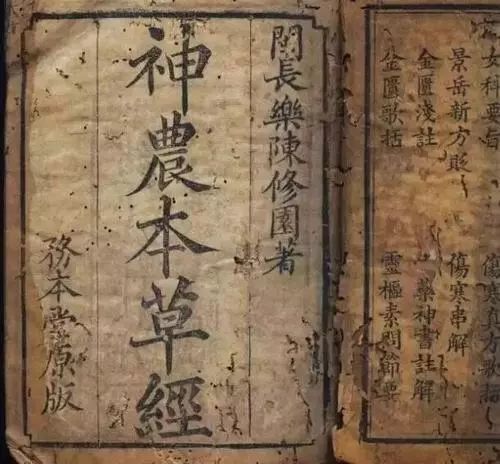
Viewing the relationship between China and ginseng from an academic expert's perspective requires transcending simple agricultural statistics. It demands a multi-layered analysis ranging from the philosophical classification systems of the ancient Shennong Ben Cao Jing (Divine Farmer's Classic of Materia Medica) to the geopolitical shifts of the Ming-Qing transition, the formation of Manchu identity, and the restructuring of value chains in the 21st-century global healthcare market.
This research report comprehensively examines the historical trajectory and modern transformation of ginseng in China. Specifically, based on botanical classification and chemical profiling of ginsenosides, it deeply investigates the political economy of the Qing Imperial Household Department's monopoly and the "Ginseng Road" trade with Joseon Korea. Furthermore, it diagnoses the impact of the modern ginseng industry value chain centered in Jilin Province and the institutional expansion of the "Medicine and Food Homology" policy. Through this, we can clearly understand how ginseng evolved from the "Emperor's Herb" of the past to the "Industrial Gold Mine" of the present, and what strategic intentions lie beneath China's current moves.
2. Botanical Classification and Biochemical Profiling: Scientific Identity
2.1 Diversity of the Panax Genus and Comparative Botany
Globally, there are approximately 17 species within the Panax genus, exhibiting distinct differences based on geographical distribution and pharmacological efficacy.1 China occupies a unique biological position possessing major commercial species: Panax ginseng (Asian Ginseng), Panax quinquefolius (American Ginseng/Western Ginseng), and Panax notoginseng (Sanqi/Chinese Ginseng) are all cultivated or native to its vast territory.1
Academically, when referring to "Ginseng (Renshen)," it primarily denotes Panax ginseng cultivated or native to Northeast China (Jilin, Liaoning, Heilongjiang). This is the same species as Korean Ginseng, characterized morphologically by palmately compound leaves, red berries, and a root shape resembling a human figure.1 In contrast, Panax notoginseng, cultivated extensively in southern regions like Yunnan, is clearly distinguished from Panax ginseng not only botanically but also in Traditional Chinese Medicine (TCM) indications. According to TCM theory and modern pharmacology, P. notoginseng is specialized for hemostasis, hematoma treatment, and improving blood circulation.5 Conversely, P. ginseng is characterized as a tonic that supplements Qi, strengthens the spleen and lungs, and enhances cognitive function and immunity.2
Recent advancements in molecular biology have refined these distinctions. DNA barcoding technology and genomic analysis have become decisive tools for identifying the botanical origin of processed ginseng products. Specifically, identification techniques using genetic markers like ITS2 or psbA-trnH are being standardized to distinguish high-value wild ginseng from lower-grade substitutes in the Chinese market.7
2.2 Chemical Diversity of Ginsenosides and Terroir
Ginsenosides, the triterpene saponins determining ginseng's pharmacological efficacy, are the most critical chemical indicators for quality assessment. Chinese academia has conducted multifaceted research to prove the chemical competitiveness of domestic ginseng, particularly from the Changbai Mountain region in Jilin, compared to ginseng from Korea or other regions.
Research data indicates that ginsenoside composition varies significantly by plant part (root, root hair, leaf), cultivation age, and origin. Generally, the main root is rich in Ginsenosides Rb1 and Rc, while leaves and root hairs show relatively higher contents of Re, Rd, and Rg1.8 In analyses of 3-4 year-old ginseng from Jilin, contents of Re, Rc, Rg1, Rg3, and Rf tended to increase with age, while Rb1 peaked at three years.10
Notably, comparative studies of terroir reveal that soil mineral composition and climate are variables as significant as genetics. Some studies comparing ginseng grown in New Zealand's volcanic soil with Chinese and Korean samples showed significantly higher levels of Re, Rf, and Rg1 in the New Zealand samples.11 However, Chinese researchers emphasize that improved cultivars in Jilin, such as "Jilin Huangguo Renshen," demonstrate higher saponin content than local landraces, arguing that quality gaps are narrowing through breeding programs.1
Additionally, the ratio of Ginsenoside Rb1 (sedative, PPD group) to Rg1 (stimulant, PPT group) is a key marker. Traditionally, this ratio distinguished American Ginseng (high Rb1, strong sedative effect) from Asian Ginseng (balanced Rg1, tonic/stimulant effect).1 The Chinese Pharmacopoeia grades ginseng based on these profiles and recently focuses on enzymatic treatment and fermentation technologies to enhance rare ginsenosides (Rg3, Rh2, Compound K) generated during processing (Red/Black Ginseng).3
2.3 Pharmacopoeia Standardization and Regulatory Comparison
National pharmacopoeias serve as both trade barriers and quality benchmarks. The Chinese Pharmacopoeia (CP), Korean Pharmacopoeia (KP), Japanese Pharmacopoeia (JP), and others present different marker components and content standards. The CP strictly manages Ginseng, Sanqi, and American Ginseng as separate categories and is continuously strengthening limits on pesticide residues and heavy metals to meet international GAP/GMP standards.13
Distinguishing the pharmacological differences between Red Ginseng (steamed and dried) and White Ginseng is essential for the advancement of the Chinese ginseng industry. The steaming process induces chemical structural changes, generating anticancer components like Rg3. The pharmacopoeias of China, Korea, and Japan all list Red Ginseng as a distinct medicinal product, officially recognizing that processing confers qualitative changes beyond preservation.15 Recent Chinese research utilizes advanced mass spectrometry (UPLC-Q-Exactive-MS) to analyze how pretreatment methods in different pharmacopoeias affect ginsenoside extraction yields, attempting to lead international standard (ISO) establishment.13
3. Historical Horizons: The Root Determining Imperial Rise and Fall
3.1 Shennong Ben Cao Jing and Ancient Medical Definitions
The historical perception of ginseng in China traces back to the Shennong Ben Cao Jing (Divine Farmer's Classic of Materia Medica), estimated to be written around the beginning of the Common Era. This text classified drugs into Upper, Middle, and Lower grades based on efficacy and toxicity. Ginseng was classified as a "Superior (Upper) Herb," defined as a drug that is "non-toxic, does not harm the body even when taken for a long time, lightens the body, supplements Qi, and extends life (不老延年)".16
The ginseng recorded in this text likely referred to Wild Ginseng growing deep in the mountains, distinct from modern cultivated varieties. It was described as a spiritual medicine that supplements the five viscera, stabilizes the spirit (安精神), stops palpitations (定魂魄), and brightens wisdom (開心益智).16 These records influenced Li Shizhen's Ben Cao Gang Mu in the Ming Dynasty, solidifying ginseng's medical authority and adding mystical value due to its anthropomorphic shape.19
3.2 The Ming-Qing Transition and the Manchu Ginseng Strategy
Seventeenth-century Northeast Asian history cannot be explained without ginseng. For the Later Jin and the subsequent Qing Empire established by the Manchus (Jurchens), ginseng was not merely a specialty product but a potent "War Chest" for waging war against the Ming Dynasty. The Manchu region, particularly Changbai Mountain and the Ussuri River basin, was the prime habitat for top-grade wild ginseng. Nurhaci, the Manchu leader, prioritized securing interests in the ginseng trade during tribal unification.20
By around 1608, Nurhaci succeeded in monopolizing the ginseng trade with the Ming. He collected ginseng from northern Manchuria (Heilongjiang), sold it at high prices in border markets (Horse Markets), or exchanged it for silver to secure military funds and purchase iron and weapons. Historians assess this as "The Qing dynasty rose on ginseng".21 At the time, the price of one jin (approx. 600g) of ginseng reached tens of taels of silver, causing a massive outflow of silver from the Ming economy.
3.3 Qing Imperial Management: Imperial Household Department and the Eight Banners
Upon controlling China, the Qing declared ginseng the exclusive property of the Imperial clan and established a highly centralized management system. The Imperial Household Department (Neiwufu), managing the Emperor's private finance, directly controlled monopolies on ginseng, salt, and furs.21 The Department operated a "Ginseng Pass" system; harvesting without this pass resulted in severe punishment.
The operational arm of this system was the Eight Banners, the Manchu military-social organization. They patrolled ginseng producing areas and cracked down on smuggling.24 Notably, the Qing implemented a "Willow Palisade" (Liu Tiao Bian) policy to seal off Manchuria, their sacred homeland, forbidding Han Chinese migration. This was a measure to preserve Manchu identity while simultaneously protecting high-value resources like ginseng.22 However, population pressure and famine in the 18th century led to an influx of migrants (blind flow) into Manchuria, depleting wild resources and eventually necessitating the dawn of ginseng cultivation technology.25
3.4 The "Ginseng Road" with Joseon: Political Economy of Tribute Trade
In relations between the Qing and Joseon Korea, ginseng was a crucial diplomatic currency and a source of conflict. Korean Ginseng (Joseon Ginseng) was recognized as top-quality even within China, and Joseon offered it as tribute (Jinhunsam) to the Qing court through regular envoys.26
Simultaneously, active ginseng trade occurred at border markets (Kaishi) along the Yalu and Tumen Rivers. Joseon merchants exported ginseng to earn silver, which they used to import Chinese silk and books. Modern scholars term this trade route the "Ginseng Road," comparable in significance to the Silk Road in Northeast Asian economic history.28 However, conflicts such as "Border Trespassing," where Koreans crossed into Manchuria to harvest ginseng, caused diplomatic disputes, leading the Qing to protest violations of territorial sovereignty and imperial property.28
4. Modern Chinese Ginseng Industry: Jilin-Centric Global Supply Chain
4.1 Overwhelming Production and the Geo-Economics of Changbai Mountain
In the 21st century, China is undeniably the world's largest ginseng producer. Jilin Province alone accounts for approximately 60% of China's total production and 40% of the global output.29 In 2023, Jilin's harvest reached 34,000 tons, with the industry's comprehensive output value exceeding 70 billion RMB (approx. 9.83 billion USD), projected to surpass 80 billion RMB in 2024.29
The Changbai Mountain region offers optimal conditions (Dao-di area) with volcanic humus soil and a cool, humid climate. However, behind this quantitative growth lies the painful history of "Ginseng sold at the price of vegetables." Until the early 2000s, excessive pesticide use and lack of quality control by smallholder farmers relegated Chinese ginseng to a low-priced raw material status.30 Current policies focus on high-value strategies to overcome this.
4.2 Expansion of "Medicine and Food Homology" Policy
To expand the consumer base, the Chinese government has leveraged the "Medicine and Food Homology" (MFH) policy. This allows traditionally medicinal items to be used as general food ingredients. Since ginseng (under 5 years old) was included in 2012, the market has shifted.31
In 2024, this policy expanded further. The National Health Commission (NHC) and State Administration for Market Regulation (SAMR) added American Ginseng (Panax quinquefolius), Ganoderma lucidum, and others to the health food ingredient catalog effective May 1, 2024. This deregulation drives the explosive growth of functional beverages ("One Whole Root" water), snacks, and ready-to-drink markets. The market size for ginseng health foods in China is projected to grow significantly, fueled by post-pandemic demand for immunity and respiratory health (Long-COVID management).
4.3 Value Chain Analysis: From Material Exporter to Brand Owner
China's ginseng value chain has long held a structural contradiction: it is the largest exporter of raw materials but the largest importer of high-value processed products. Trade data from 2024 shows China imports heavily from Canada and South Korea while exporting to Japan and Hong Kong.32 The surge in imports from Korea indicates a persistent consumer preference for Korean brands (e.g., CheongKwanJang) over domestic ones.32
Additionally, China serves as a conduit for North Korean ginseng. Due to sanctions, North Korean ginseng entering through border areas like Hunchun is often "laundered" into Chinese products or processed for re-export, constituting a shadow sector of the value chain.33 To break this low-value structure, Jilin Province is aggressively promoting the "Changbai Mountain Ginseng" brand, establishing Geographical Indication (GI) protection and encouraging "Lin-xia-shan" (forest-grown) ginseng to mimic wild conditions.34
5. Cultural Assetization and Brand Wars: Changbai Mountain vs. CheongKwanJang
5.1 Asymmetry in Brand Competitiveness
The strongest competitor to China's "Changbai Mountain Ginseng" is Korea's "CheongKwanJang." While CheongKwanJang commands a unified national brand image with strict quality control, Changbai Mountain Ginseng suffers from brand fragmentation among numerous enterprises.36 Studies indicate that while awareness is rising, perceptions of "low technological content" and inconsistent quality persist.35
To counter this, the Jilin government formed a Ginseng Planting Alliance to standardize cultivation and enforce safety standards, attempting to shift farmer mindsets from quantity to quality.30
5.2 Soft Power Strategy via Festivals
China actively utilizes ginseng culture as a tourism resource. The Fusong Ginseng Festival recreates the traditional "Fangshan" (releasing the mountain) ritual of ginseng diggers, promoting it as Intangible Cultural Heritage.30 While similar to festivals in Geumsan (Korea) or Wisconsin (USA), the Chinese approach emphasizes the historical sovereignty of ginseng and the superiority of TCM.37
6. Technology and Future Outlook
6.1 Biotech Breakthroughs
The future of the Chinese ginseng industry lies in biotechnology. To overcome low absorption rates of traditional consumption, companies are adopting enzyme treatment and microbial fermentation. Patents are surging for bioconversion technologies that transform high-molecular ginsenosides (Rb1, Rg1) into rare, absorbable ginsenosides (CK, Rg3).39 Furthermore, synthetic biology is enabling the production of ginsenosides via yeast fermentation, potentially disrupting traditional agriculture.3
6.2 Market and Price Trends (2024-2025)
The global ginseng market is forecast to grow at a CAGR of 4.6%, reaching over 1.1 billion USD by 2033.42 Price polarization is expected to intensify. As of late 2024/2025, Chinese cultivated ginseng remains cheaper (approx. $28/kg) than US ($46/kg) or Japanese ($52/kg) varieties.43 However, wild and high-quality forest-grown ginseng prices are skyrocketing due to scarcity. Climate change poses a severe threat, as warming temperatures may force suitable cultivation zones in Changbai Mountain to higher altitudes or northern latitudes, necessitating resilient cultivar development.44
7. Conclusion
From an academic perspective, the relationship between China and ginseng is a grand narrative extending beyond agriculture. Ginseng was the financial engine that allowed the Manchu Qing dynasty to conquer China and the diplomatic medium defining relations with Joseon. After a period of decline, ginseng is resurgent in the 21st century, driven by the "Healthy China" vision and bio-industry strategies.
Modern China is attempting to shift the industry paradigm by combining the overwhelming production base of Jilin with regulatory flexibility (Medicine and Food Homology) and advanced biotechnology. However, challenges remain: overcoming the premium brand barrier of Korean ginseng, rectifying the trade deficit in high-value products, and ensuring transparency regarding North Korean imports. Ultimately, China's "Ginseng Rise" is a national project combining cultural ambition for the globalization of TCM with economic strategies to dominate the bio-economy. The silent war over ginseng in Northeast Asia continues, with China's moves serving as a critical variable in the future global healthcare landscape.
Works cited
Characteristics of Panax ginseng Cultivars in Korea and China - MDPI, accessed on November 16, 2025, https://www.mdpi.com/1420-3049/25/11/2635
The Panax Genus: Three Main types of Ginseng - Chong Hoe Healthcare, accessed on November 16, 2025, https://www.chonghoehealthcare.com/post/the-panax-genus
Progress on the Studies of the Key Enzymes of Ginsenoside Biosynthesis - MDPI, accessed on November 16, 2025, https://www.mdpi.com/1420-3049/23/3/589
Panax ginseng - Wikipedia, accessed on November 16, 2025, https://en.wikipedia.org/wiki/Panax_ginseng
Analysis of common and characteristic actions of Panax ginseng and Panax notoginseng in wound healing based on network pharmacology and meta-analysis - PubMed Central, accessed on November 16, 2025, https://pmc.ncbi.nlm.nih.gov/articles/PMC10310867/
Chemical Diversity of Panax ginseng, Panax quinquifolium, and Panax notoginseng - NIH, accessed on November 16, 2025, https://pmc.ncbi.nlm.nih.gov/articles/PMC3659563/
Advances in the Identification Methods of Food-Medicine Homologous Herbal Materials, accessed on November 16, 2025, https://www.mdpi.com/2304-8158/14/4/608
Comparison of Ginsenoside Contents in Different Parts of Korean Ginseng (Panax ginseng C.A. Meyer) - PMC - NIH, accessed on November 16, 2025, https://pmc.ncbi.nlm.nih.gov/articles/PMC5216893/
The Difference between White and Red Ginseng: Variations in Ginsenosides and Immunomodulation* - Thieme Connect, accessed on November 16, 2025, https://www.thieme-connect.com/products/ejournals/pdf/10.1055/a-0641-6240.pdf
Comparing eight types of ginsenosides in ginseng of different plant ages and regions using RRLC-Q-TOF MS/MS - PMC - NIH, accessed on November 16, 2025, https://pmc.ncbi.nlm.nih.gov/articles/PMC7031739/
Analysis of Ginsenoside Content (Panax ginseng) from Different Regions - PMC, accessed on November 16, 2025, https://pmc.ncbi.nlm.nih.gov/articles/PMC6803836/
Phytochemistry, quality control and biosynthesis in ginseng research from 2021 to 2023: A state-of-the-art review concerning advances and challenges - PMC - NIH, accessed on November 16, 2025, https://pmc.ncbi.nlm.nih.gov/articles/PMC11589329/
Effects of Different Extraction Methods in Pharmacopoeia on the Content and Structure Transformation of Ginsenosides - MDPI, accessed on November 16, 2025, https://www.mdpi.com/1420-3049/27/14/4347
Effects of Different Extraction Methods in Pharmacopoeia on the Content and Structure Transformation of Ginsenosides - PubMed, accessed on November 16, 2025, https://pubmed.ncbi.nlm.nih.gov/35889220/
Characterization of Korean Red Ginseng (Panax ginseng Meyer): History, preparation method, and chemical composition - PMC - NIH, accessed on November 16, 2025, https://pmc.ncbi.nlm.nih.gov/articles/PMC4593794/
Shennong Bencaojing - Wikipedia, accessed on November 16, 2025, https://en.wikipedia.org/wiki/Shennong_Bencaojing
The first Materia Medica: The Shen Nong Ben Cao Jing - ResearchGate, accessed on November 16, 2025, https://www.researchgate.net/publication/320146361_The_first_Materia_Medica_The_Shen_Nong_Ben_Cao_Jing
Ginseng and Border Trespassing Between Qing China and Chos??n Korea - ResearchGate, accessed on November 16, 2025, https://www.researchgate.net/publication/236767941_Ginseng_and_Border_Trespassing_Between_Qing_China_and_Chosn_Korea
Ginseng in Traditional Herbal Prescriptions - PMC - PubMed Central, accessed on November 16, 2025, https://pmc.ncbi.nlm.nih.gov/articles/PMC3659587/
The Manchu Conquest in World-Historical Perspective: A Note on Trade and Silver, accessed on November 16, 2025, https://cces.snu.ac.kr/wp-content/uploads/sites/327/2025/02/jces1_3dicosmo.pdf
SOURCES OF THE CANTON GUARANTY SYSTEM - Scholarly Publications Leiden University, accessed on November 16, 2025, https://scholarlypublications.universiteitleiden.nl/access/item%3A2963187/view
Rethinking Qing Manchuria's Prohibition Policies | Journal of Chinese History 中國歷史學刊, accessed on November 16, 2025, https://www.cambridge.org/core/journals/journal-of-chinese-history/article/rethinking-qing-manchurias-prohibition-policies/721527DC0DB5E0236F793239EE153971
Imperial Household Department - Wikipedia, accessed on November 16, 2025, https://en.wikipedia.org/wiki/Imperial_Household_Department
Eight Banners - Wikipedia, accessed on November 16, 2025, https://en.wikipedia.org/wiki/Eight_Banners
1000 to 1800 (Part II) - The Cambridge Economic History of China, accessed on November 16, 2025, https://www.cambridge.org/core/books/cambridge-economic-history-of-china/1000-to-1800/1524EF2ACC1DEA44134D98C00F4D90AA
A Study of Ginseng Culture within 'Joseonwangjosilok' through Textual Frequency Analysis, accessed on November 16, 2025, https://www.e-ompa.org/journal/view.html?uid=384&vmd=Full
Foreign Trade of Joseon during the Early 17th century: A New Perspective and its Limitations, accessed on November 16, 2025, https://accesson.kr/rks/assets/pdf/7896/journal-22-2-233.pdf
Ginseng and Borderland - OAPEN Library, accessed on November 16, 2025, https://library.oapen.org/handle/20.500.12657/31134
From black soil to global markets: Jilin's ginseng journey - Jilin, China, accessed on November 16, 2025, https://www.gojilin.gov.cn/2025/05/21/c_14037.htm
Ginseng in NE China's Changbai Mountain grows into 'gold mine' - People's Daily Online, accessed on November 16, 2025, http://en.people.cn/n3/2024/0830/c90000-20212257.html
AI-assisted literature exploration of innovative Chinese medicine formulas - PubMed Central, accessed on November 16, 2025, https://pmc.ncbi.nlm.nih.gov/articles/PMC10995307/
Ginseng roots in China Trade | The Observatory of Economic Complexity, accessed on November 16, 2025, https://oec.world/en/profile/bilateral-product/ginseng-roots/reporter/chn
Working Papers | Publications | RESEARCH : Korea Institute for International Economic Policy, accessed on November 16, 2025, https://www.kiep.go.kr/gallery.es?mid=a20205030000&bid=0001&tag=&nPage=71
GB/T 19506-2009 English PDF, accessed on November 16, 2025, https://www.chinesestandard.net/PDF/English.aspx/GBT19506-2009
Study on Brand Construction of Ginseng in Changbai Mountain - Atlantis Press, accessed on November 16, 2025, https://www.atlantis-press.com/article/55912085.pdf
"Strengthening Market Position through Branding “CheongKwanJang”" by Kay Ryung Koo, Sang Yong Kim et al. - Asia Marketing Journal, accessed on November 16, 2025, https://amj.kma.re.kr/journal/vol20/iss2/4/
Ginseng Festival Draws International Visitors To Wausau - WPR, accessed on November 16, 2025, https://www.wpr.org/agriculture/ginseng-festival-draws-international-visitors-wausau
Cultural tour introduces ginseng to Soldiers, families | Article | The United States Army, accessed on November 16, 2025, https://www.army.mil/article/270851/cultural_tour_introduces_ginseng_to_soldiers_families
US11925702B2 - Methods for extracting compound from ginseng, ginseng extract comprising the compound and composition for enhancing skin barrier comprising the same - Google Patents, accessed on November 16, 2025, https://patents.google.com/patent/US11925702B2/en
Research on the Extraction Techniques of Ginseng Based on Patent Analysis - Asian Journal of Social Pharmacy, accessed on November 16, 2025, http://asianjsp.syphu.edu.cn/CN/article/downloadArticleFile.do?attachType=PDF&id=675
Sustainable Production of Ginsenosides: Advances in Biosynthesis and Metabolic Engineering - PMC - PubMed Central, accessed on November 16, 2025, https://pmc.ncbi.nlm.nih.gov/articles/PMC12473280/
Ginseng Market Size, Share & Trends Analysis Report 2033 - Straits Research, accessed on November 16, 2025, https://straitsresearch.com/report/ginseng-market
Ginseng Price Trend 2025, Chart, Index and Forecast - IMARC Group, accessed on November 16, 2025, https://www.imarcgroup.com/ginseng-pricing-report
Comparison of the average prices paid for wild versus cultivated... - ResearchGate, accessed on November 16, 2025, https://www.researchgate.net/figure/Comparison-of-the-average-prices-paid-for-wild-versus-cultivated-American-ginseng-for-the_fig4_350109283


Comments